
 Save
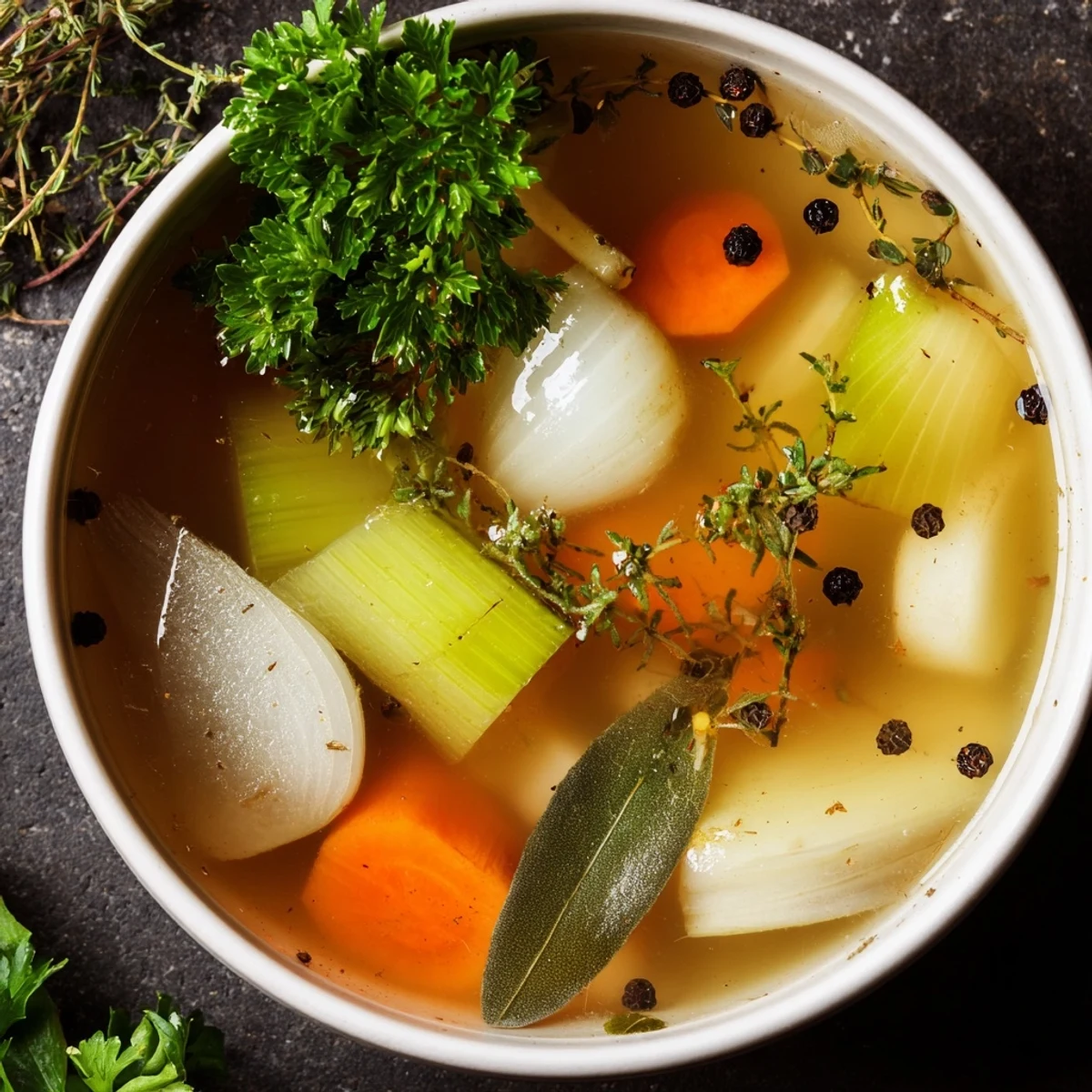
Save Prepare a nourishing broth by simmering a vibrant mix of carrots, celery, onion, leek, and optional parsnip with fresh parsley, thyme, bay leaves, and garlic cloves. The infusion of aromatic herbs and peppercorns adds depth, while slow simmering for one hour extracts rich flavors. Strain before use and enjoy as a warming base or sipping broth. Roasting vegetables beforehand enhances its complexity. Store in the refrigerator for up to five days or freeze for months.
There's something almost meditative about making vegetable broth from scratch, especially on a quiet morning when the kitchen is still cool and empty. I discovered the magic of it years ago when I realized that what I'd been throwing away—vegetable scraps, wilted herb stems, that awkward half-celery stalk—could become something deeply nourishing and fragrant. Now, whenever I simmer a pot, the whole house fills with this gentle, earthy aroma that somehow makes everything feel more intentional.
I remember serving this broth to my neighbor during a particularly cold winter—just a simple mug of it, steaming and golden, and watching her face light up as she took that first sip. She came back asking for the recipe three times because apparently nothing else she'd made since quite measured up. That's when I realized this wasn't just broth; it was comfort in its purest form.
Ingredients
- Carrots: Their natural sweetness is the backbone of any good broth, and peeling them removes any bitter exterior skin.
- Celery: Brings a subtle savory depth and helps round out the flavor profile beautifully.
- Onion: Quartering it rather than dicing keeps it from breaking apart and clouding your broth.
- Leek: Often overlooked, but it adds a gentle sweetness that other aromatics can't quite match.
- Parsnip: Optional, yes, but it adds an unexpected sweetness and body if you have one lying around.
- Garlic: Smashed rather than minced releases its oils more gently into the broth.
- Fresh parsley: Use the stems and leaves together for maximum flavor extraction.
- Thyme: Woody and herbaceous, a classic choice that anchors the flavor.
- Bay leaves: Two is enough; more can overpower the delicate balance.
- Dill or rosemary: Choose based on your mood—dill is lighter and brighter, rosemary is more robust.
- Black peppercorns: Whole peppercorns add flavor without overwhelming like ground pepper would.
- Salt: Start conservative and adjust at the end; it concentrates as the broth simmers.
- Cold water: Always start with cold water so vegetables release their flavor gradually rather than seizing up.
Instructions
- Prep your stage:
- Rinse all vegetables thoroughly, peel what needs peeling, and chop everything into roughly similar-sized pieces so they cook evenly. This takes just minutes but makes the next hour feel organized and intentional.
- Build your pot:
- Combine all vegetables, herbs, peppercorns, and salt in your stockpot, then pour in the cold water. Cold water is key—it lets the vegetables slowly release their essence rather than shock-cooking.
- Bring it to life:
- Turn the heat to medium-high and watch for steam to rise, then tiny bubbles at first, then a gentle rolling boil. You'll notice the vegetables start to soften and the water begins taking on color almost immediately.
- Simmer with patience:
- Once it reaches a gentle boil, reduce to low heat and partially cover the pot. A partial cover lets steam escape while keeping flavors from scattering everywhere; aim for the faintest bubble breaking the surface every few seconds.
- Tend and taste:
- About 15 minutes in, you'll see foam rising to the top—gently skim this off with a spoon. It's just impurities and starch, and removing it keeps your broth clear and clean-tasting.
- Let time do the work:
- Set a timer for 1 hour and walk away, knowing that each passing minute is deepening the flavor. The kitchen will smell incredible; resist the urge to rush.
- Cool and strain:
- After an hour, the vegetables will look soft and tired and the broth will be golden and fragrant. Pour everything slowly through a fine-mesh sieve into a clean pot or large bowl, letting the liquid flow through while the solids stay behind.
- Finish and store:
- Taste it now while it's warm and adjust salt if needed. Use it immediately or let it cool completely before refrigerating in covered containers where it will keep for 5 days, or freeze for months.
 Save
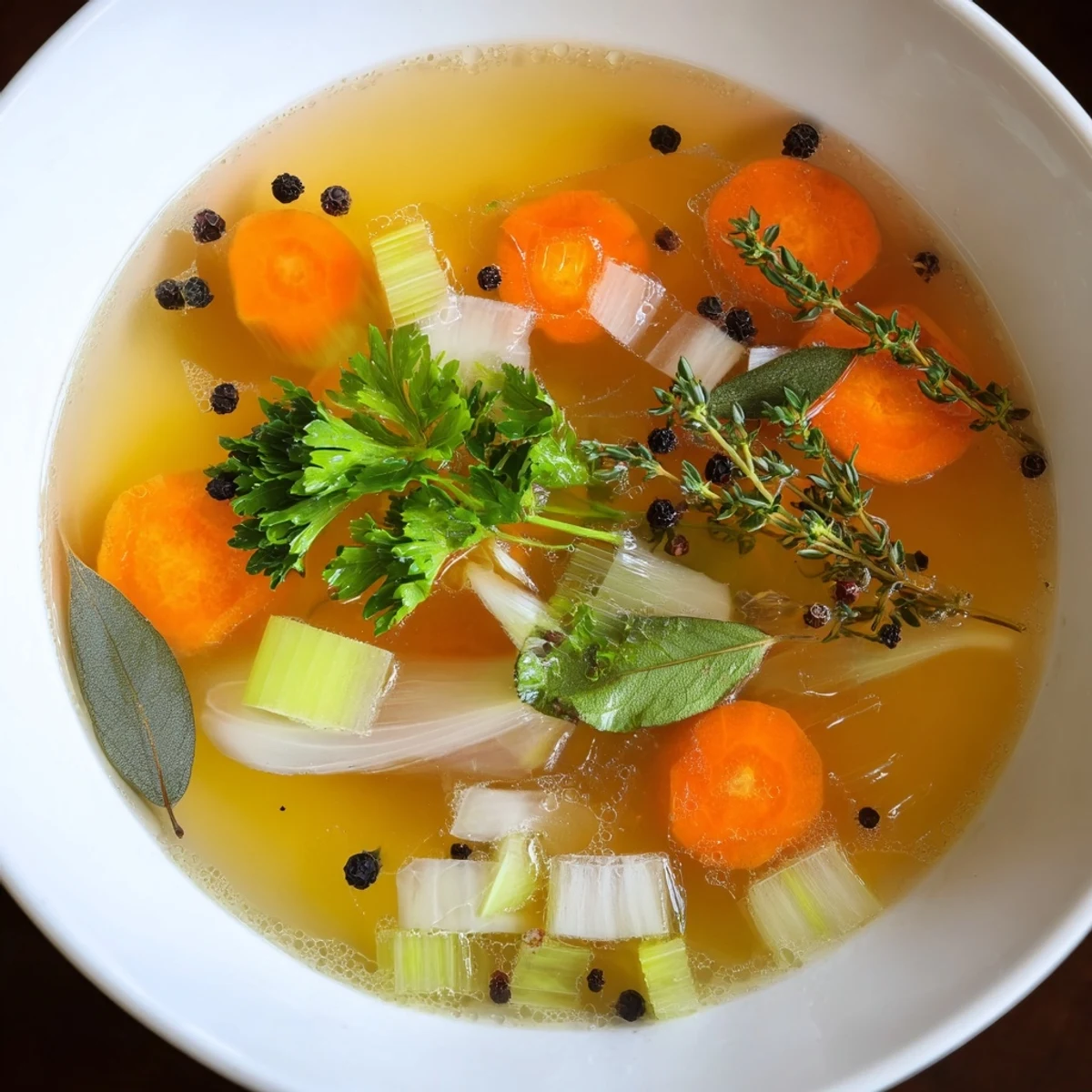
Save I realized the true gift of this broth one winter morning when I was running late, stressed, and had nothing in the fridge except some sad vegetables and this amber liquid I'd frozen weeks earlier. I warmed a mug of it, added nothing else, and sat down for just three minutes. Somehow, everything felt less overwhelming after that simple cup.
The Roasting Difference
If you have an extra 30 minutes before you start, roast your vegetables first at 400°F until they're caramelized and slightly charred. This creates a broth that's noticeably richer and deeper, almost amber instead of pale gold. It's a small step that teaches you something fundamental about cooking: time and heat together can transform simple vegetables into something extraordinary.
Flavor Variations Worth Trying
Once you've made this basic broth a few times, you'll start noticing opportunities for variation. Mushroom stems add an earthy umami depth, fennel brings a subtle licorice note, and a couple of tomatoes contribute natural acidity and sweetness. I've learned to keep a container in my freezer specifically for vegetable scraps that are too good to waste—carrot tops, celery leaves, the pale parts of leeks. This way, making broth becomes less about following a recipe and more about conversation with what you have on hand.
When to Reach for This Broth
This is your foundation for everything from delicate vegetable soups to creamy risottos, from grainy pilafs to the simple act of sipping it warm from a mug on a difficult day. The best part is that it asks nothing of the vegetables, holding their true character rather than masking it. Think of it as the voice underneath a good conversation, present and essential but never overwhelming.
- Use it as the base for any soup where you want clean, honest vegetable flavor to shine through.
- Simmer grains like rice, farro, or quinoa in broth instead of water for immediate depth of flavor.
- Warm a cup plain with just a pinch of sea salt and fresh cracked pepper for the simplest, most nourishing drink.
 Save
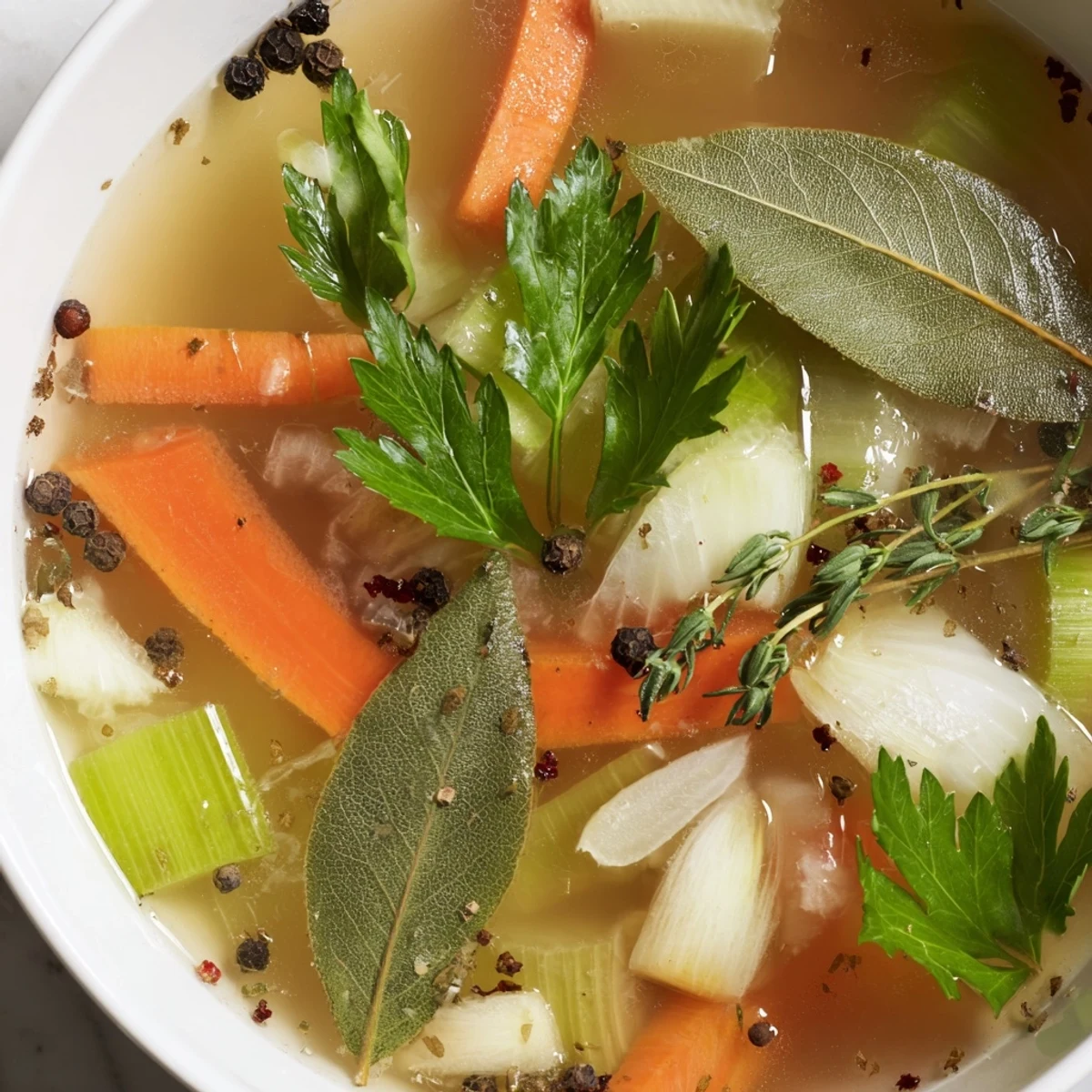
Save Making vegetable broth teaches you patience in the best way, turning an hour of simmering into an investment in future meals that taste unmistakably better. Once you've mastered this, you'll find yourself making it often and sharing it with people who didn't even know they needed it.
Recipe Questions & Answers
- → What vegetables work best for this broth?
-
Carrots, celery, onion, leek, and optional parsnip create a balanced and flavorful base.
- → How long should the broth simmer?
-
Simmer gently for 1 hour to fully extract flavors from vegetables and herbs.
- → Can I enhance flavor by roasting vegetables first?
-
Yes, roasting at 400°F for 30 minutes before simmering adds richer, caramelized notes.
- → What herbs add aroma and depth?
-
Parsley, thyme, bay leaves, dill or rosemary, along with peppercorns, infuse aromatic complexity.
- → How should the broth be stored?
-
Keep refrigerated for up to 5 days or freeze for up to 3 months in airtight containers.