
 Save
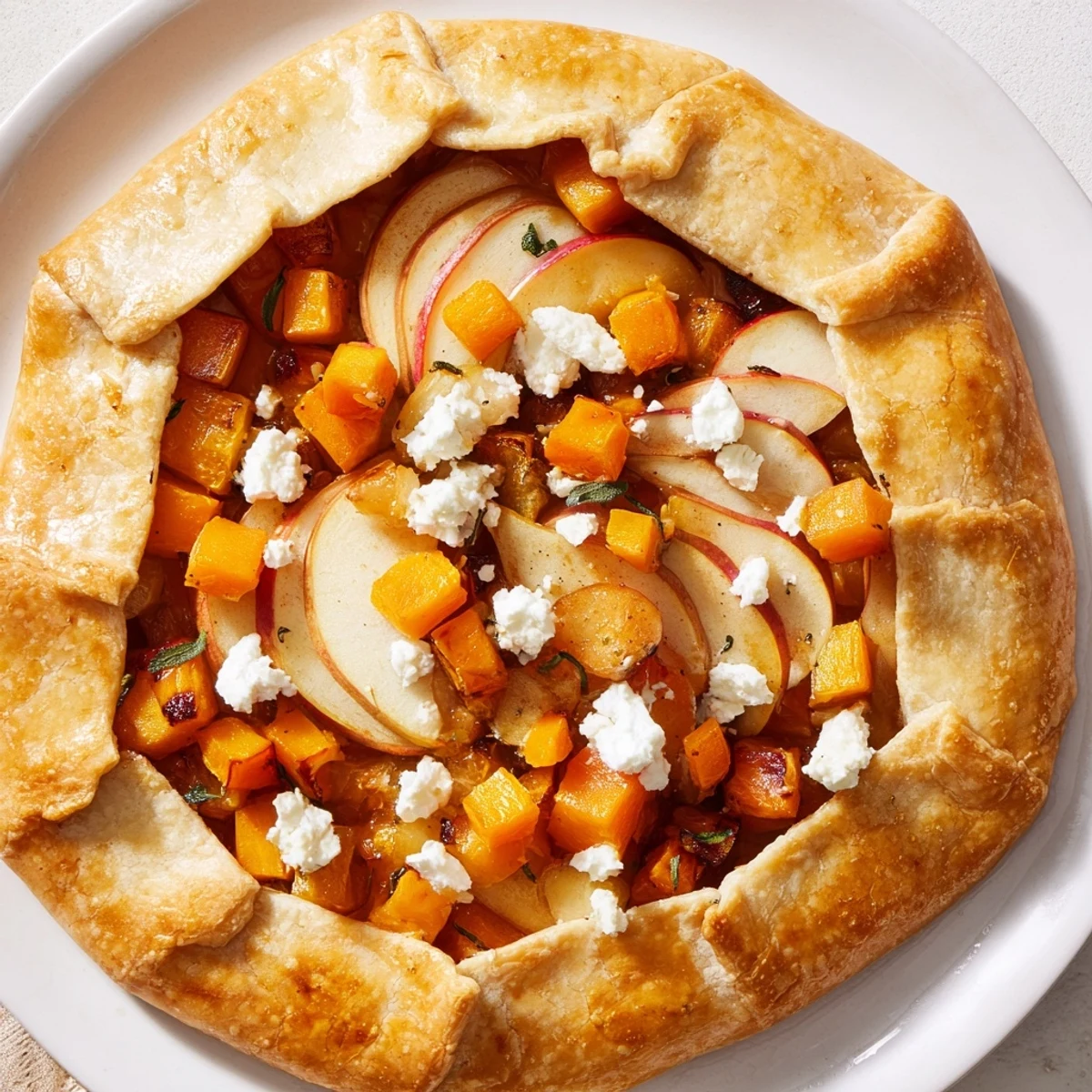
Save This rustic pastry features roasted butternut squash and tender apples enveloped in a flaky, golden crust. Fresh sage and caramelized onions add depth, while an egg wash ensures a beautiful finish. It serves six and takes just over an hour from start to finish, making it an ideal centerpiece for a cozy vegetarian gathering.
There's something about autumn that makes me want to bake something rustic and golden, and this galette emerged one crisp October afternoon when I had a basket of apples from the farmers market and half a butternut squash sitting on my counter. I'd been craving something that felt both elegant and comforting, the kind of dish you can slice into wedges and feel proud serving to people you care about. The combination of caramelized squash, sweet apples, and sage seemed to whisper fall into every bite. So I rolled out some pastry, piled on the filling, and let the oven work its magic.
I remember bringing this to a dinner party last year, nervous because I'd never made a galette before, and my friend Sarah took one bite and closed her eyes like she'd just tasted something precious. She asked for the recipe right there at the table, and I realized that this wasn't just pretty pastry and roasted vegetables—it was the kind of thing that makes people feel seen and cared for. That's when it stopped being a recipe in my head and became something I wanted to make again and again.
Ingredients
- All-purpose flour: The foundation of a tender, flaky crust; keep it cold and don't overwork the dough or you'll end up with something tough instead of tender.
- Cold unsalted butter: This is non-negotiable for flakiness; those little butter pieces create steam pockets that give you those gorgeous, shattering layers.
- Ice water: Add it slowly and sparingly, mixing just until the dough comes together; this is where patience pays off.
- Butternut squash: Cut into roughly 1/2-inch cubes so they roast evenly and caramelize into something almost candy-like.
- Apples: Honeycrisp or Gala work beautifully because they hold their shape without turning to mush, but use what you love.
- Fresh sage: This herb is the secret ingredient that makes people ask what that incredible flavor is; don't skip it or substitute dried sage, which tastes dusty by comparison.
- Olive oil: A good quality one brings out the sweetness in the squash and apples without overpowering them.
- Red onion: Adds a gentle sharpness that balances all the sweetness and keeps the filling from feeling cloying.
- Goat cheese or feta: Optional but worth it; the tang cuts through the richness and adds a creamy texture that makes each bite more interesting.
Instructions
- Make the pastry with cold hands and a light touch:
- Combine flour and salt, then work in the cold butter cubes using a pastry cutter or your fingertips until the mixture looks like coarse breadcrumbs with some pea-sized pieces of butter still visible. Add ice water one tablespoon at a time, mixing gently with a fork until the dough just barely comes together; you're looking for shaggy but holdable, not smooth or wet.
- Chill the dough properly:
- Shape it into a disk, wrap it in plastic wrap, and let it rest in the fridge for at least 30 minutes; this relaxes the gluten and makes rolling easier.
- Roast the squash until it caramelizes:
- Toss the cubed squash with 1 tablespoon olive oil, half the chopped sage, salt, pepper, and nutmeg, then spread it on a baking sheet in a single layer. Roast at 400°F for 20–25 minutes, stirring halfway through, until the edges are golden and the insides are tender; you want some browning here because that's where the sweetness concentrates.
- Build the filling with layers of flavor:
- Sauté the sliced red onion in the remaining olive oil over medium heat for 6–8 minutes until it's soft and just barely golden, then add the apple slices and cook gently for 2–3 minutes; the goal is softened but not mushy. Off heat, fold in the roasted squash, the remaining sage, and the cheese if you're using it, stirring just enough to combine.
- Roll and assemble with confidence:
- Roll the chilled pastry into a 12-inch circle on a lightly floured surface, transfer it to a parchment-lined baking sheet, then spoon the filling into the center, leaving a 2-inch border all around. Fold the pastry edges up and over the filling, pleating and folding as it naturally wants to go; rustic and imperfect is exactly right here.
- Finish with an egg wash for golden burnish:
- Whisk together the beaten egg and milk, brush it generously over the pastry edges, and sprinkle with coarse sea salt if you like that extra finishing touch.
- Bake until everything is golden and bubbling:
- Bake at 400°F for 35–40 minutes until the pastry is deep golden brown and you can see the filling bubbling at the edges. Let it cool for 10 minutes before slicing so everything sets just enough to hold together.
 Save
Save There's a moment right when you pull this out of the oven, when the pastry is crackling as it cools and the kitchen smells like butter and sage and roasted fruit, that feels like autumn itself in edible form. My partner came downstairs while it was still warm, and we cut into it without waiting for anyone else to arrive, which felt like our own small celebration.
Pastry Variations That Work
If you want to experiment, you can swap the all-purpose flour for half whole wheat flour for a nuttier flavor, or use part spelt flour if you're feeling adventurous; just know that whole grains absorb slightly more water, so add the ice water a tiny bit more cautiously. Some people swear by adding a tablespoon of sugar or a pinch of cardamom to the pastry dough itself, which adds a subtle sweetness that complements the filling beautifully. The pastry is forgiving enough to play with, so don't be afraid to make it your own.
Filling Flexibility and Substitutions
Sweet potato works beautifully instead of butternut squash if that's what you have, and some seasons I use a mix of both for different textures and colors. The apples can be adjusted based on what's in season or what you prefer; Granny Smith adds sharpness, while Fuji or Jonagold bring deeper sweetness. Ricotta or even a sharp blue cheese can replace the goat cheese depending on your mood, and I've even skipped the cheese entirely when I wanted the vegetables to be the main story.
Serving and Storage Secrets
This galette tastes just as good at room temperature as it does warm, which means you can bake it in the morning and slice it for dinner without reheating. A simple green salad with a sharp vinaigrette on the side cuts through the richness perfectly, and if you have a crisp white wine like Sauvignon Blanc or Albariño in the house, it's the ideal pairing. Leftovers keep covered at room temperature for a day or two, or you can refrigerate them for up to four days and gently warm them in a low oven before serving.
- Slice it into wedges like a pie, not squares, for the most elegant plating.
- If the pastry is browning too quickly before the filling is done, tent it loosely with foil for the last 10 minutes of baking.
- You can assemble the galette up to 4 hours ahead, cover it loosely with plastic, and bake it when you're ready.
 Save
Save Every time I make this, I'm reminded that the best food is the kind that brings people around a table and makes them slow down for a moment. This galette does exactly that.
Recipe Questions & Answers
- → Can I make the dough ahead of time?
-
Yes, you can prepare the pastry dough up to two days in advance. Wrap it tightly in plastic wrap and store it in the refrigerator until you are ready to roll it out.
- → Is this dish sweet or savory?
-
This galette strikes a balance between sweet and savory. The natural sugars in the roasted squash and apples provide sweetness, while the sage, onions, and goat cheese offer a savory depth.
- → Can I use store-bought pastry?
-
Absolutely. While homemade flaky pastry is recommended for the best texture, a store-bought refrigerated pie crust or puff pastry works well as a time-saving alternative.
- → What can I substitute for goat cheese?
-
If you prefer a different flavor profile, crumbled feta, blue cheese, or even a soft ricotta can be used in place of goat cheese to add creaminess and tang.
- → Should I serve this warm or cold?
-
It tastes best when served warm or at room temperature. This allows the flavors to shine while keeping the pastry crisp and the filling tender.
- → How do I store leftovers?
-
Store any leftovers in an airtight container in the refrigerator for up to three days. Reheat slices in the oven to restore the pastry's crispness.